E1

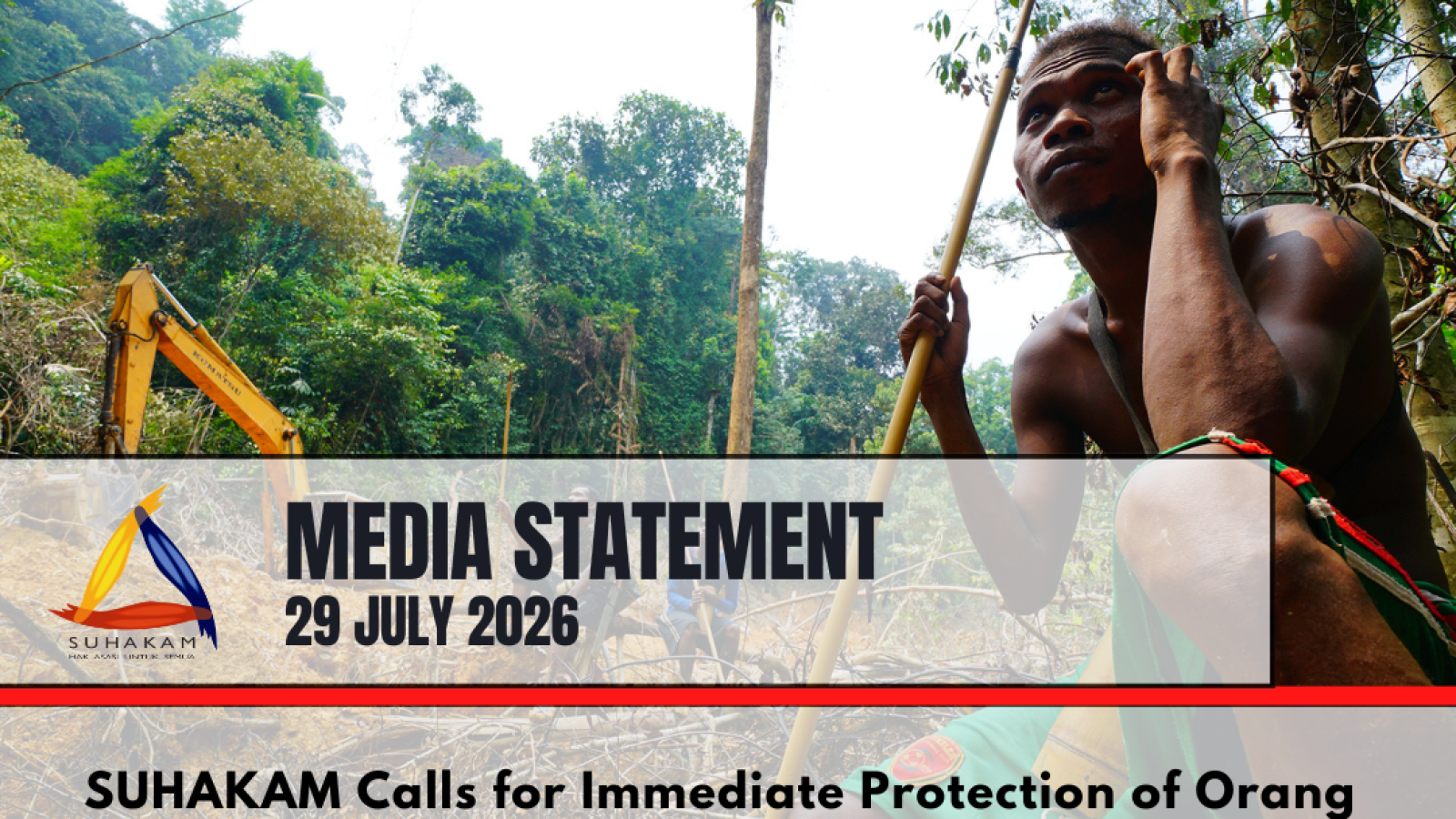
Media Statement No. 45-2026_SUHAKAM Calls for Immediate Protection of Orang Asli Customary Land Rights in Maran

KUALA LUMPUR (29 JULY 2026) – The Human Rights Commission of Malaysia (SUHAKAM) expresses its deep concern over the ongoing land dispute involving the Orang Asli community of Kampung Sungai Cot, Maran, Pahang. While recognising the State Authority’s powers over land administration, SUHAKAM emphasises that such powers must be exercised in accordance with the Federal Constitution, the rule of law and Malaysia’s human rights obligations.

Orang Asli native customary land is far more than an economic asset. It is intrinsically linked to their identity, culture, spirituality, traditional knowledge and survival as Indigenous Peoples. The loss of customary lands therefore threatens not only livelihoods but also the continued existence of their cultural heritage and way of life. SUHAKAM has consistently maintained that the customary land rights of the Orang Asli deserve meaningful recognition and effective protection. Existing legal principles recognise that customary rights arising from the longstanding occupation and use of ancestral lands warrant protection. The Aboriginal Peoples Act 1954 should therefore be implemented in a manner that gives full effect to its protective purpose and safeguards the rights and welfare of Orang Asli communities.

SUHAKAM further reiterates that development cannot come at the expense of the fundamental rights of Indigenous Peoples. Economic development and investment must be pursued in a manner that respects human rights, protects customary land rights and ensures that no community is left behind. This is also reflected in Malaysia’s National Action Plan on Business and Human Rights (NAPBHR), spearheaded by the Prime Minister’s Department together with relevant ministries, which recognises respect for Indigenous Peoples’ rights and environmental protection as essential components of responsible business conduct. Economic interests should never override the rights of Orang Asli and the protection of their customary lands.

Consistent with the United Nations Declaration on the Rights of Indigenous Peoples (UNDRIP), decisions affecting Indigenous Peoples’ lands, territories and resources should only proceed following meaningful consultation and with their Free, Prior and Informed Consent (FPIC). Consultation that occurs only after decisions have effectively been made cannot satisfy the requirements of genuine participation or respect for their rights.

SUHAKAM is particularly concerned that the use of criminal enforcement in the context of unresolved customary land disputes risks escalating tensions and undermining public confidence in efforts to achieve a just resolution. Where there are legitimate and unresolved claims over customary lands, priority should be given to dialogue, mediation and fair legal processes rather than enforcement measures that may further marginalise Orang Asli communities.

SUHAKAM therefore calls upon the Pahang State Government to:

  1. ⁠immediately engage in meaningful dialogue with the affected Orang Asli community and all relevant stakeholders;
  2. suspend any activities that may permanently affect the disputed customary lands until the claims have been independently and fairly resolved;
  3. ensure that any future development affecting Orang Asli customary lands complies with the principle of FPIC; and
  4. strengthen mechanisms for recognising, protecting and gazetting Orang Asli customary lands in accordance with the Federal Constitution, domestic jurisprudence and international human rights standards.

SUHAKAM also urges the Federal Government to accelerate comprehensive legal and policy reforms relating to Orang Asli land rights. The recurring nature of such disputes demonstrates the urgent need for a coherent national framework that provides legal certainty while respecting the rights, dignity and self-determination of Indigenous Peoples.

Respect for Indigenous Peoples’ rights is not an obstacle to development. Rather, it is the foundation of sustainable, inclusive and equitable development. Malaysia’s progress should never come at the cost of dispossessing Indigenous communities of the lands that have sustained them for generations. SUHAKAM remains ready to facilitate constructive dialogue with all parties and to continue advocating for solutions that uphold justice, human rights and the rule of law.

-END-

Human Rights Commission of Malaysia (SUHAKAM)
29 July 2026

Template PS 2025 (3)

Media Statement No. 44-2026_SUHAKAM Expresses Concern Over Court Of Appeal Ruling On Children’s Citizenship

KUALA LUMPUR (25 JULY 2026) – The Human Rights Commission of Malaysia (SUHAKAM) notes with concern the Court of Appeal’s decision that children born out of wedlock to Malaysian fathers and non-Malaysian mothers are not entitled to Malaysian citizenship under the Federal Constitution.

SUHAKAM fully respects the independence of the judiciary and acknowledges that the Court is required to interpret and apply the Federal Constitution as it currently stands. Nevertheless, the decision highlights continuing gaps in Malaysia’s citizenship framework that may leave some children at risk of statelessness and burdened with indefinite and prolonged legal uncertainty.

Every child has the right to acquire a nationality. Article 7 of the United Nations Convention on the Rights of the Child (CRC), to which Malaysia has been a State Party since 1995, recognises the right of every child to be registered immediately after birth and to acquire a nationality. States are required to implement these rights, particularly where a child would otherwise be rendered stateless. In its Concluding Observations on Malaysia adopted in February 2026, the UN Committee on the Rights of the Child urged Malaysia to strengthen its legal framework to ensure that all children have access to nationality without discrimination and to take effective measures to prevent and reduce childhood statelessness. The Committee further emphasised that the best interests of the child and the principle of non-discrimination should guide all decisions affecting children’s nationality rights.

SUHAKAM has consistently maintained that no child should be disadvantaged or denied access to nationality because of the marital status of their parents or circumstances beyond their control. Citizenship should not be determined by moral judgments relating to the circumstances of a child’s birth. Every child is entitled to equal protection and non-discrimination under the law, regardless of the marital status of their parents. A child’s legal identity and future should never depend on decisions or circumstances for which the child bears no responsibility. Citizenship is not merely a legal status; it is the gateway to the enjoyment of many fundamental rights, including access to education, healthcare, social protection, employment and full participation in society.

SUHAKAM therefore reiterates its longstanding call for Malaysia’s citizenship laws and policies to be progressively reformed in line with the principles of equality, non-discrimination and the best interests of the child. While the constitutional amendments allowing Malaysian mothers to confer citizenship on their children born overseas marked an important milestone, further reforms remain necessary to ensure that every child enjoys equal protection and that no child is left without effective access to nationality because of legal or administrative barriers.

Pending broader reforms, SUHAKAM also encourages the Government to continue utilising existing constitutional and administrative mechanisms available under Article 15A of the Federal Constitution which was specifically enacted to prevent children from becoming stateless. The executive discretion must be exercised in accordance with the child’s best interests and to prevent the possibility of children becoming stateless through no fault of theirs.

SUHAKAM remains committed to working constructively with the Government, Parliament and all relevant stakeholders to advance a child rights-based citizenship framework that places the best interests of every child at its core, in line with Malaysia’s obligations under the CRC.

-END-

Human Rights Commission of Malaysia (SUHAKAM)

25 July 2026

E1

Media Statement No. 43-2026_SUHAKAM Calls for the Full and Meaningful Participation of All Citizens in the Electoral Process

KUALA LUMPUR (23 JULY 2026) – The right to participate in political life, including the right to vote and to stand for election as a representative, is a fundamental human right of every citizen without discrimination. According to statistics from the Department for the Development of Persons with Disabilities (JPOKU), Department of Social Welfare (JKM), shared with SUHAKAM on 2 May 2026, Negeri Sembilan alone has 28,976 registered Persons with Disabilities (PWDs) who are eligible to vote. This figure does not include individuals with temporary disabilities arising from various factors such as accidents or illnesses. These statistics underscore the importance of ensuring that the electoral system is genuinely inclusive and guarantees the full, effective and meaningful participation of all voters, regardless of the type of disability they may have.

Access to political participation is a fundamental right that applies to all citizens without discrimination. It is guaranteed under the Federal Constitution, the Persons with Disabilities Act 2008 (Act 685), and Article 29 of the Convention on the Rights of Persons with Disabilities (CRPD). However, SUHAKAM’s findings indicate that inclusive participation of PWDs has yet to be fully realised due to various structural barriers before, during and after the electoral process. Accordingly, SUHAKAM calls upon the Election Commission (EC), political parties, election candidates and relevant agencies to safeguard these rights by taking the following measures:

  1. Ensure Physical Accessibility Throughout the Electoral Process
    • Ensure that all polling stations comply with the principles of universal design, including the provision of ramps, accessible pathways, designated parking spaces, accessible toilets and polling channels that are easily accessible.
    • Provide appropriate mobility assistance and transportation for PWD voters who require such support.
  2. Provide Accessible Election Information for Everyone
    • Make election manifestos available in easy-to-read formats, Braille, large print and digital formats compatible with screen readers.
    • Ensure that websites, campaign materials and manifestos comply with digital accessibility standards.
    • Provide subtitles, closed captions and Malaysian Sign Language (BIM) interpretation during all election talks, debates and campaign events.
  3. Strengthen Disability-Friendly Voting Procedures
    • Provide clear information on the rights of PWD voters, including the use of companions and the availability of reasonable accommodation during the voting process.
    • Ensure election officials receive training on disability rights, inclusive communication and the provision of reasonable accommodation, including encouraging the learning of Malaysian Sign Language.
    • Guarantee the secrecy of the ballot and the autonomy of PWD voters throughout the voting process.
  4. Expand Inclusive Civic Education
    • Raise awareness among PWDs, their families, caregivers and the wider community about the importance of political participation.
    • Provide election-related information in plain language and in formats that meet the needs of all categories of PWDs.
  5. Promote the Participation of PWDs as Election Candidates
    • Encourage political parties to provide opportunities, support and leadership pathways for PWD candidates.
    • Review legal, financial and social barriers that restrict the participation of PWDs as election candidates.

SUHAKAM emphasises that an inclusive democracy is not merely about ensuring that everyone is able to cast their vote, but also about ensuring that every citizen has equal access to information, political campaigns, the voting process and the opportunity to be elected as a representative. Malaysia cannot achieve a truly fair democratic system if any citizen continues to face difficulties or barriers in exercising their political rights solely because of disability. The full and effective participation of PWDs in political life forms part of Malaysia’s commitment to human rights and the principles of the Sustainable Development Goals (SDGs).

In conjunction with the upcoming Negeri Sembilan State Election, SUHAKAM encourages PWDs, family members, caregivers, organisations representing PWDs, election observers and members of the public to promptly report any barriers encountered throughout the electoral process via email at PWDcommittee@suhakam.org.my. The Negeri Sembilan State Election presents another opportunity for all stakeholders to fulfil their shared responsibility in ensuring meaningful inclusivity throughout the electoral process, particularly for persons with disabilities.

When discussing this issue, SUHAKAM is often asked about the actual number of PWDs who are unable to vote. SUHAKAM’s position is that even if only one person is denied the right to political participation, the electoral process cannot be regarded as fully inclusive, in line with the principle of “Leave No One Behind”.

SUHAKAM remains committed to working closely with the Election Commission, government agencies, political parties, organisations representing persons with disabilities and civil society to strengthen an electoral system that is more inclusive, accessible and respectful of the rights of every Malaysian citizen.

-END-

Human Rights Commission of Malaysia (SUHAKAM)
23 July 2026

job vacancy 1

IKLAN TAWARAN SEBUT HARGA PENERBITAN DAN PENGHASILAN VIDEO PENDEK ANAK JEL

Tawaran adalah dipelawa daripada syarikat-syarikat tempatan yang berdaftar dengan Kementerian Kewangan Malaysia (Kod Bidang Berkaitan) atau Suruhanjaya Syarikat Malaysia bagi menyertai sebut harga berikut :
NO. SEBUT HARGA : SHM.001/1/18 Jld. 5 (7)
TAJUK SEBUT HARGA : PENERBITAN VIDEO PENDEK DOKUMENTARI DAN PEMBANGUNAN KEMPEN ANAK JEL
TARIKH IKLAN : 21 Julai 2026
TARIKH KEMUKAKAN KERTAS KERJA DAN HASIL PENERBITAN VIDEO – KERJA LEPAS : 3 Ogos 2026 (sebelum 12.00 tengah hari)

Syarikat yang memerlukan penjelasan lanjut hendaklah menghubungi pegawai berikut :
a) En. Mohamad Azizi Bin Azmi (azizi@suhakam.org.my) 03-2612 5690 – Pengurusan & Kewangan
b) En. Ahmad Firdaus Bin Abd. Shukor (firdaus@suhakam.org.my) 03-2612 5650 – Pengurusan & Kewangan
c) Pn. Munawiza Juliana Binti Mohd Jasin (munawizajuliana@suhakam.org.my) 03-2612 5666 – Pegawai Penyelaras Projek

Maklumat lanjut:

2

Media Statement No. 42-2026_SUHAKAM Welcomes Parliamentary Debate On Its 2024 Annual Report And Calls For Concrete Follow-Up Action

KUALA LUMPUR (9 JULY 2026) – The Human Rights Commission of Malaysia (SUHAKAM) welcomes the tabling and debate of its 2024 Annual Report in the Dewan Rakyat on 7 and 8 July 2026, with the participation of 36 Members of Parliament who deliberated on a broad range of human rights issues affecting the nation. The debate reflects Parliament’s continuing commitment to ensuring that human rights remain an integral part of Malaysia’s governance and democratic accountability. 

SUHAKAM records its sincere appreciation to YB Dato’ Seri Azalina Othman Said, Minister in the Prime Minister’s Department (Law and Institutional Reform), for moving the motion to table and debate the Annual Report, reaffirming the Government’s commitment to advancing, protecting and fulfilling human rights in accordance with the Federal Constitution, the rule of law and the public interest. SUHAKAM also expresses its special gratitude to YB Tuan M. Kulasegaran A/L V. Murugeson, Deputy Minister in the Prime Minister’s Department (Law and Institutional Reform), for concluding the debate and for his unwavering dedication to advancing the human rights agenda for the benefit of all Malaysians.

Throughout the two-day debate, Members of Parliament from both sides of the House demonstrated strong engagement by deliberating on a broad range of human rights concerns and institutional reforms. The key issues raised included:

  1. Strengthening SUHAKAM’s statutory powers, including enhancing its investigative and monitoring functions, ensuring timely and substantive responses to its recommendations by ministries and agencies, and increasing financial and institutional support to enable the Commission to effectively discharge its mandate.
  2. ⁠Protecting the rights of children and other vulnerable groups, including women, older persons, persons with disabilities, Indigenous Peoples and migrant workers, as well as advancing reforms to the juvenile justice system and broader economic, social and cultural rights.
  3. Enacting a comprehensive legal and policy framework on refugees.
  4. Strengthening human rights education and capacity-building through the implementation of ATHAM 2.0, expansion of human rights training modules, and integration of human rights education within the national education system.
  5. Advancing prison and detention reforms, including improving conditions of detention, addressing deaths in custody, enhancing transparency and accountability, and strengthening rehabilitation, parole and reintegration programmes.
  6. Protecting the rights and welfare of gig workers, including fair working conditions, occupational safety, social protection, income security and effective dispute resolution mechanisms.
  7. ⁠Addressing issues relating to citizenship, documentation and access to legal identity, particularly for individuals facing barriers to obtaining identity documents and accessing essential public services.
  8. Strengthening human rights safeguards within drug rehabilitation and treatment programmes by promoting dignity, evidence-based practices and respect for human rights.
  9. ⁠Addressing human rights challenges affecting rural and underserved communities, including equitable access to infrastructure, essential services and sustainable development opportunities.
  1. Enhancing inter-agency coordination, policy coherence and whole-of-government cooperation in advancing and protecting human rights.
  2. Promoting stronger collaboration between Parliament, the Government and independent institutions to ensure the effective implementation of human rights commitments and recommendations.

SUHAKAM welcomes the constructive and substantive nature of the debate, which reflects the growing recognition that human rights issues cut across all sectors and require coordinated action by the Government, Parliament and all relevant stakeholders. SUHAKAM emphasises that the Annual Report is an important accountability mechanism that assesses the country’s human rights situation, identifies systemic challenges and offers practical recommendations to strengthen the protection and promotion of human rights. The 2024 Annual Report highlights eleven core areas of focus:

  1. Institutional reform and strengthening human rights protection
  2. ⁠Rights of children and vulnerable groups.
  3. ⁠Citizenship and statelessness.
  4. ⁠Refugees and migrants.
  5. ⁠Deaths in custody and conditions of detention centres.
  6. ⁠Indigenous Peoples’ rights and customary land.
  7. ⁠Rights of persons with disabilities, women and gender equality.
  8. ⁠Human rights education and awareness.
  9. ⁠Legislative and policy reforms.
  10. Business and human rights.
  11. International human rights engagement.

SUHAKAM acknowledges the constructive responses and commitments from various ministries and agencies on pressing human rights matters. SUHAKAM therefore hopes that the concerns, recommendations and proposals raised during the parliamentary debate will be translated into concrete policies, legislative reforms and administrative measures by the relevant ministries and agencies. Meaningful implementation of these recommendations will further strengthen public institutions, enhance accountability and improve the protection of the rights and dignity of everyone in Malaysia. SUHAKAM stands ready to work collaboratively with the Government, Parliament and all stakeholders to monitor progress and advance a human rights-based approach to governance.

-END-

Human Rights Commission of Malaysia (SUHAKAM)

9 July 2026

E1

Media Statement No. 41-2026_Child Safeguarding Conference Sabah 2026

KUALA LUMPUR (8 JULY 2026) – On 4th July 2026, the Human Rights Commission of Malaysia (SUHAKAM), Child Safeguarding Initiative (CSI), and Majlis Perkhidmatan Masyarakat Sabah (MPMS) have successfully organised the Child Safeguarding Conference Sabah 2026, bringing together government agencies, civil society organisations, educational institutions, healthcare professionals, law enforcement agencies, child protection practitioners, and strategic partners to strengthen collective efforts in protecting children’s rights and safety.

Held under the theme “Building Communities That Protect“, the Conference reaffirmed that safeguarding children is a shared responsibility that requires coordinated action from families, schools, communities, civil society, the private sector, and government. The Conference served as an important platform to strengthen collaboration, share good practices, and explore practical solutions to address the evolving challenges affecting children in Sabah.

In her opening address, Yang Berhormat Datuk Rina Jainal, Assistant Minister of Women, Community Welfare, and People’s Well-being Sabah, reaffirmed the Sabah State Government’s commitment to strengthening child protection systems through cross-sector collaboration, early intervention, and greater community awareness. She stressed that safeguarding efforts must be strengthened at every level of society to ensure that every child grows up in a safe and supportive environment.

The Conference commenced with keynote addresses by Mr. Sam Gipson, Chair of the Association of International Malaysian Schools and Principal of Kinabalu International School (KIS), and Puan Elsie Primus, Registrar of the Subordinate Courts of Sabah and Sarawak. Both speakers underscored the importance of early intervention, prevention, and collective responsibility, emphasising that safeguarding children begins within families and communities before cases reach the justice system.

The Conference featured three dialogue sessions that examined critical issues relating to child safeguarding:

i. What the Law Says and What It Means for Us in Protecting Children

    The session examined Malaysia’s legal and policy framework on child protection while identifying gaps in implementation and enforcement. Discussions also addressed emerging and persistent issues affecting children, including online safety, as well as the protection of undocumented, stateless, and indigenous children, highlighting the need for stronger coordination and rights-based implementation.

    ii. Protecting Children Starts with Action: Understanding Sabah’s Reporting System

      The session provided participants with practical insights into Sabah’s child protection and reporting mechanisms. Representatives from the Royal Malaysia Police (D11), the Hospital SCAN (Suspected Child Abuse and Neglect) Team, and the Department of Social Welfare (JKM) shared their respective roles, inter-agency coordination, and procedures for reporting, investigating, and responding to child protection cases.

      iii. Beyond Policy: How Can We Better Advocate for Children’s Rights

        The discussion explored how effective advocacy can influence policy reform and strengthen child protection systems. Panellists highlighted the importance of collective action among government agencies, civil society organisations, communities, and children themselves, while sharing best practices to strengthen advocacy, partnerships, and the promotion of children’s rights.

        Throughout the Conference, participants reaffirmed that effective child safeguarding requires a whole-of-society approach that combines strong legal and policy frameworks, coordinated reporting and response mechanisms, meaningful participation of children, and sustained collaborations. The Conference also recognised the establishment of the Anti-Bullying Tribunal as an important milestone in strengthening accountability and protection mechanisms for children and young people.  

        In her closing address, Datuk Mariati Robert, Vice Chairman of SUHAKAM emphasised that safeguarding children goes beyond policy and legal compliance; it reflects the values of society in ensuring every child is safe, respected, and able to realise their full potential. She underscored that strong laws, effective institutions, and active community participation must work together in a coordinated and child-centred manner.

        Datuk Mariati further highlighted that children must be recognised not only as beneficiaries of protection but also as active participants in decisions affecting their lives. She called on all stakeholders to amplify children’s voices and ensure that their views are meaningfully considered in accordance with the principles of the United Nations Convention on the Rights of the Child.

        Looking ahead, SUHAKAM reiterates its commitment to working closely with the Government of Malaysia, the Sabah State Government, civil society organisations, and all relevant stakeholders in advancing the objectives of the National Child Policy and the National Child Action Plan (2026-2030). SUHAKAM also calls for continued collaboration to ensure that safeguarding efforts remain inclusive, particularly for children with disabilities, stateless and undocumented children, and indigenous children, so that no child is left behind. The success of the Conference will ultimately be measured not by the discussions held, but by the concrete actions taken to strengthen child safeguarding systems and improve the safety, dignity, and well-being of every child.

        SUHAKAM extends its sincere appreciation to the CSI, MPMS, speakers, panellists, moderators, volunteers, partner organisations, and all participants for their invaluable contributions towards the success of the Conference.

        Together, we remain committed to building communities that protect every child.

        -END-

        Human Rights Commission of Malaysia (SUHAKAM)
        8 July 2026

        1

        [OCC] Media Statement No. 40-2026_The Children’s Commissioners Express Concern Over School Stabbing Incident and Urge Protection of Children’s Privacy

        KUALA LUMPUR (7 JULY 2026) – The Children’s Commissioners (CC) of the Human Rights Commission of Malaysia (SUHAKAM) express their deep concern over the recent stabbing incident involving students at a secondary school in Banting, Selangor. We extend our heartfelt sympathies to the child who was injured and wish her a full and speedy recovery. We also acknowledge the emotional distress experienced by the families, school community, and all children affected by this tragic incident.

        The CC emphasise that both the victim and the alleged perpetrator are children and are therefore entitled to the protection and safeguards afforded under Malaysian law and the United Nations Convention on the Rights of the Child (CRC), which Malaysia is a party to since 1995. While the incident is currently under police investigation, it is imperative that the rights, dignity, and best interests of every child involved are fully respected throughout the legal process.

        The CC are particularly alarmed by the widespread circulation of photographs, videos, personal information, and unverified claims relating to the children involved on social media and messaging platforms. Such actions can cause lasting psychological harm, expose children to public stigma, interfere with investigations, and compromise their rehabilitation and future reintegration into society.

        The public, media organisations, and all online users are reminded that Section 15 of the Child Act 2001 prohibits the publication or dissemination of any information that may lead to the identification of a child involved in proceedings or matters protected under the Act. This prohibition extends to names, photographs, videos, school details, family information, addresses, or any other particulars capable of revealing the identity of the child. Any person who contravenes subsection this provision commits an offence and shall on conviction be liable to a fine not exceeding ten thousand ringgit or to imprisonment for a term not exceeding five years or to both.

        The CC further urge the public to refrain from speculation regarding the circumstances of the case, including the child’s medical condition, disability, mental health, or alleged motive. Such speculation is irresponsible, risks prejudicing ongoing investigations, and may perpetuate harmful stereotypes and discrimination.

        Recent media reports indicate that the suspect’s legal counsel has stated that the child is autistic.

        Should this information be confirmed, the OCC stresses that disability must never be used to stigmatise, vilify, or incite hatred against any child. Every child, including children with disabilities, has the right to equal protection before the law, dignity, non-discrimination, and access to appropriate support services.

        This incident should also serve as a reminder of the importance of strengthening violence prevention measures in schools through early identification of risk factors, accessible mental health and psychosocial support, effective child protection mechanisms, collaboration between schools, parents, and relevant agencies, and timely interventions that address the needs of vulnerable children before crises occur.

        The CC will continue to monitor developments closely and engage with the relevant authorities to ensure that the rights and welfare of all children involved are safeguarded in accordance with the Child Act 2001, the Anti-Bullying Act 2026, the Convention on the Rights of the Child, and other applicable laws.

        The Children’s Commissioners call upon every member of the public to act responsibly by refraining from sharing or forwarding any content that identifies or exploits children. Protecting children extends beyond ensuring their physical safety—it also requires safeguarding their privacy, dignity, and future.

        -END-

        Office of the Children’s Commissioner (OCC)
        Human Rights Commission of Malaysia (SUHAKAM)

        7 July 2026

        E1

        Media Statement No. 39-2026_SUHAKAM Strengthens Partnership with Sarawak Government to Advance Human Rights and Inclusive Development

        KUALA LUMPUR (2 JULY 2026) – The Human Rights Commission of Malaysia (SUHAKAM) today paid a courtesy call on the Premier of Sarawak, YAB Datuk Patinggi Tan Sri (Dr) Abang Haji Abdul Rahman Zohari Bin Tun Datuk Abang Haji Openg, at the Premier’s Office, Kompleks Satria Pertiwi in Petra Jaya, Kuching. The meeting served as an important platform to strengthen cooperation between SUHAKAM and the Sarawak Government in advancing the promotion and protection of human rights through constructive dialogue, policy engagement and strategic collaboration.

        During the courtesy call, SUHAKAM expressed its appreciation to the Premier for the warm reception and the opportunity to exchange views on matters relating to human rights, inclusive development and the well-being of the people of Sarawak. SUHAKAM commended the Sarawak Government’s continued commitment to integrating human rights principles into its development agenda, particularly through policies and programmes that improve the lives of vulnerable, disadvantaged and marginalised communities.

        The Commission acknowledged the Sarawak Government’s progressive social protection initiatives, including the Endowment Fund Sarawak (EFS), Bantuan Ibu Bersalin (BIB), the Kenyalang Gold Card (KGC), targeted medical assistance programmes, women’s empowerment initiatives, the One Stop Early Intervention Centre (OSEIC) for children and persons with disabilities, investments in early childhood education through SeDidik, as well as the Free Tertiary Education Scheme Sarawak. Collectively, these initiatives reflect a comprehensive approach towards social inclusion and equitable development throughout every stage of life.

        SUHAKAM also shared its mandate as Malaysia’s National Human Rights Institution under the Human Rights Commission of Malaysia Act 1999 (Act 597) and reaffirmed its commitment to working closely with the Sarawak Government in promoting a rights-based approach to governance, policymaking and service delivery.

        SUHAKAM and the Sarawak Government recognised the importance of sustained engagement and collaboration in advancing human rights, particularly through initiatives that promote equality, social justice, accessibility and the protection of vulnerable groups. In particular, SUHAKAM Sarawak’s looks forward to strengthening collaboration with the Sarawak Government to advance and protect the rights and well-being of children through joint initiatives in child protection, child participation, public awareness, capacity-building and advocacy, in line with the best interests of every child.

        SUHAKAM believes that close collaboration between the Commission and State Governments is essential in ensuring that development is not only economically sustainable but also inclusive, equitable and centred on human dignity. The Commission looks forward to further strengthening its partnership with the Sarawak Government in advancing human rights and improving the quality of life and well-being of all Sarawakians.

        “Human rights are most meaningful when they are translated into policies and programmes that improve people’s everyday lives. SUHAKAM welcomes the Sarawak Government’s openness to continued engagement and looks forward to working together in advancing a rights-based and people-centred development agenda,” said SUHAKAM Chairperson, Dato’ Seri Mohd Hishamudin Yunus.

        -END-

        Human Rights Commission of Malaysia (SUHAKAM)
        2 July 2026

        1

        Media Statement No. 38-2026_SUHAKAM Calls for Urgent Reforms To Immigration Detention Centres

        KUALA LUMPUR (1 JULY 2026) – The Human Rights Commission of Malaysia (SUHAKAM) is deeply concerned by the disclosure that 465 deaths were recorded in immigration detention depots between 2021 and 2025, as reported by the Ministry of Home Affairs in Parliament. These figures underscore the urgent need for comprehensive reforms to better protect the lives, dignity and health of all persons held in immigration detention.

        Every death in custody must be treated with the utmost seriousness. Regardless of an individual’s immigration status, every person deprived of liberty remains entitled to the right to life, the highest attainable standard of health, and to be treated with humanity and dignity.

        SUHAKAM has consistently maintained that deaths in custody are not merely operational or administrative matters, but serious human rights concerns that demand transparency, accountability and meaningful systemic reform. Through its monitoring visits to immigration detention depots and continuous engagement with the relevant authorities, the Commission has repeatedly raised concerns over overcrowding, inadequate healthcare services, delayed medical referrals, poor sanitation, insufficient nutrition, prolonged detention, and the detrimental impact of these conditions on the physical and mental well-being of detainees. These long-standing concerns highlight the need for sustained structural reforms to ensure that immigration detention facilities comply with Malaysia’s human rights obligations.

        Therefore, SUHAKAM reiterates its longstanding recommendations that the Government:

        1. Strengthen healthcare services in all immigration detention depots by ensuring adequate numbers of qualified medical personnel, regular health screenings, prompt referrals to hospitals, continuous treatment for chronic illnesses, and sufficient access to essential medicines;
        2. Improve detention conditions by addressing overcrowding, sanitation, ventilation, nutrition and access to clean water to minimise the risk of communicable diseases and prevent avoidable deaths;
        3. Ensure every death in custody is subject to a prompt, independent, transparent and effective investigation, with findings made public where appropriate and accountability established whenever negligence or misconduct is identified; and
        4. Strengthen independent monitoring of immigration detention facilities by facilitating regular oversight by SUHAKAM and other relevant independent bodies.

        Beyond improving conditions of detention, greater emphasis must also be placed on preventive measures. Early medical screening upon admission, regular health assessments, continuous monitoring of detainees with pre-existing medical conditions, timely referrals for specialist treatment, and uninterrupted access to essential healthcare are critical to preventing avoidable deaths in custody. The reported number of deaths should serve as a catalyst for the Government to undertake a comprehensive review of immigration detention policies and practices, placing equal emphasis on accountability for deaths that occur and, more importantly, on preventing future deaths through effective, rights-based reforms.

        SUHAKAM therefore calls on the Government to take immediate and concrete action to strengthen healthcare, improve detention conditions, and implement rights-based reforms to ensure that every individual in immigration detention is treated with dignity and that preventable deaths are never regarded as inevitable.

        -END-

        Human Rights Commission of Malaysia (SUHAKAM)

        1 July 2026

        E1

        Media Statement No. 37-2026_SUHAKAM Calls for Stronger Measures Against Online Hate, Cyberbullying and Incitement to Violence

        KUALA LUMPUR (25 JUNE 2026) – In light of the growing prevalence of cyberbullying, hate speech, online harassment, and other harmful digital content, the Human Rights Commission of Malaysia (SUHAKAM) wishes to remind all members of the public that the right to freedom of expression carries corresponding duties and responsibilities. While individuals are entitled to express their views and opinions, such expression must not infringe upon the rights, dignity, safety, or well-being of others.

        SUHAKAM recalls that international human rights standards, including Article 19 of the Universal Declaration of Human Rights (UDHR) and the principles reflected in the Article 20(2) of the International Covenant on Civil and Political Rights (ICCPR), recognise that while freedom of expression is a fundamental right, it carries duties and responsibilities. Expressions that incite discrimination, hostility or violence, whether online or offline, undermine human dignity, threaten social cohesion, and may warrant appropriate legal and regulatory responses consistent with human rights principles.

        The increasing spread of hateful, threatening, discriminatory, and abusive content online poses serious risks to individuals and society as a whole. Beyond causing psychological and emotional harm to those targeted, such conduct can foster hostility, deepen social divisions, normalise prejudice, and create an environment that is conducive to discrimination and violence. Particularly alarming are instances where online discourse escalates into threats, calls for violence, or incitement against individuals and communities based on their identity, status, or perceived differences.

        SUHAKAM unequivocally condemns all forms of cyberbullying, hate speech, threats of violence, and incitement to discrimination, hostility, or harm. The normalisation of such behaviour in digital spaces undermines human dignity, social cohesion, and public safety. No individual should be subjected to intimidation, harassment, or abuse for who they are, their beliefs, or their circumstances.

        Those who misuse social media and digital platforms to spread hatred, harass others, or advocate violence must be held accountable for their actions. Freedom of expression must never be invoked as a justification for conduct that threatens the rights and safety of others. Where such actions contravene the law, appropriate and proportionate enforcement measures should be taken to ensure accountability and to deter future violations.

        SUHAKAM therefore calls upon the Government and relevant authorities to strengthen efforts to address online harm through effective enforcement of existing laws, enhanced digital safety measures, and greater public awareness on responsible online conduct. At the same time, social media platforms, educational institutions, civil society organisations, and the wider public must play an active role in promoting digital literacy, respectful engagement, and a culture of empathy and mutual respect.

        The digital sphere must not become a sanctuary for hatred, intimidation, or impunity. It should remain a space where rights are exercised responsibly and where public discourse is guided by the principles of human dignity, equality, inclusivity, and the rule of law. Only through collective responsibility and accountability can we ensure that online spaces remain safe, respectful, and conducive to constructive dialogue for all.

        -END-

        Human Rights Commission of Malaysia (SUHAKAM)
        25 June 2026